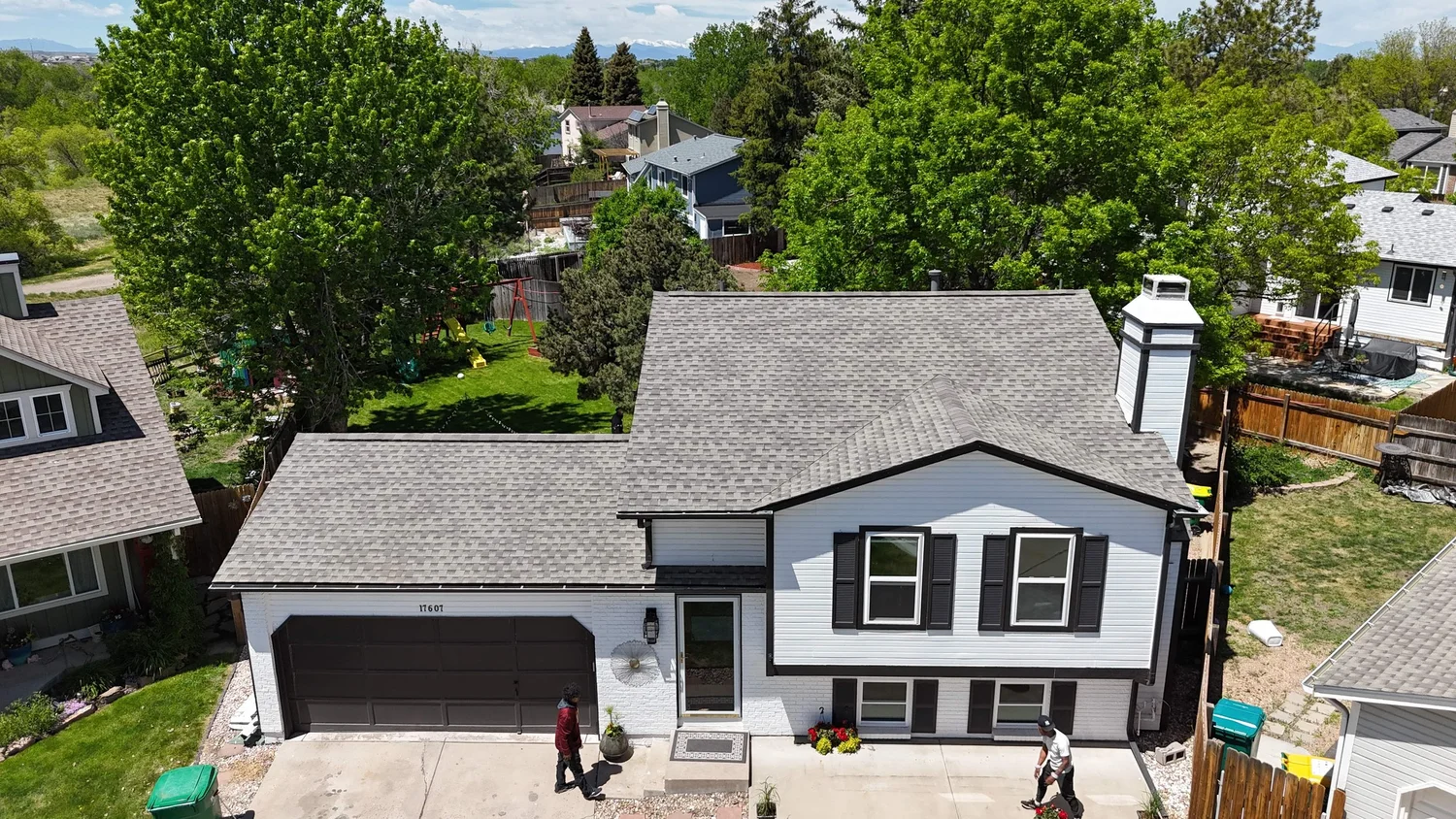
Manufacturers require adequate ventilation and exclude ventilation‑related damage from their warranties. Alta evaluates intake and exhaust on every roof we touch, then builds a balanced Lomanco ventilation system, before the shingles go on.
Alta Roofing evaluates and installs balanced attic ventilation on every roof across Colorado Springs, Pueblo and the Front Range. We check both intake and exhaust, size the system by Net Free Area to your local code, and install Lomanco vents engineered to work together. Proper ventilation protects your shingles, your attic and your manufacturer warranty, which excludes ventilation‑related damage.
Without proper attic ventilation, heat and moisture get trapped beneath your roof. Over time that can mean premature shingle deterioration, mold, damaged decking, higher cooling costs and a shorter‑performing roof.
We don't just replace shingles. We look at the entire roofing system.
Alta doesn't simply remove your old shingles and install new ones. We evaluate your home's ventilation system, including both intake and exhaust, to determine whether your new roof is properly ventilated.
A beautiful new roof over a poorly ventilated attic can leave an important underlying problem unresolved. You'd never see it from the driveway. You'd see it years early, in shingles that age fast and decking that softens.
Not just a look from the roof. We check the deck, insulation, existing vents, and where your bath fans actually terminate.
Blocked or missing intake is the most common problem we find, and the one most often overlooked.
Net Free Area math against your attic size and local code, shown to you in writing.
Including when your ventilation is already fine and doesn't need our help.
Shingle manufacturers commonly require adequate ventilation and exclude ventilation‑related damage from their limited warranties. Put a new roof over an under‑ventilated attic and the problems that attic causes can fall outside your warranty from day one. We'd rather find that before the shingles go on.
From Colorado Springs to the Denver metro, Front Range homes see conditions that expose a weak ventilation system fast.
Intense UV and strong summer sun load heat onto the roof all day. Without exhaust, that heat just builds in the attic.
Warm afternoons and freezing nights drive condensation and freeze‑thaw cycles inside an attic that can't dry out.
Repeated snowfalls followed by sunny days are ideal ice‑dam weather when the attic runs warm.
Strong Front Range winds push snow and rain sideways. We choose vents with baffle designs made to keep weather out while air moves.
A storm‑damage roof replacement is the best time to fix undersized or mismatched ventilation. We check it on every job we inspect.
Lomanco prints these on its instructions and product boxes, and they guide every system we install. Most ventilation failures we find break at least one of them.
All exhaust vents at the same height. When exhaust sits at different levels, the upper vents pull air through the lower ones instead of through the intake, which can draw rain and snow into the attic.
One type of exhaust per attic. Mixing a ridge vent with box vents, turbines or a power fan lets one exhaust act as intake for the other. Air short‑circuits across the top and the rest of the attic stays stale.
Balance intake and exhaust. About half goes in low as intake and half out high as exhaust, with intake meeting or slightly exceeding exhaust. Lomanco calls weak intake the #1 cause of ventilation failure.
Every vent has a rated Net Free Area (NFA), the open space air can actually move through, in square inches. We measure your attic floor, confirm the ratio your building department requires, and size intake and exhaust to match.
The International Residential Code baseline is 1 sq ft of ventilation per 150 sq ft of attic, reduced to 1/300 when certain vapor‑retarder and vent‑placement conditions are met.
| Step | Math | Result |
|---|---|---|
| Total ventilation needed | 2,000 ÷ 300 × 144 | 960 sq in |
| Split 50 / 50 | 960 ÷ 2 | 480 + 480 |
| Exhaust: Lomanco 750 (50 sq in each) | 480 ÷ 50 = 9.6 → 10 | 500 sq in |
| Intake: Deck‑Air DA‑4 (36 sq in each) | 500 ÷ 36 = 13.9 → 14 | 504 sq in |
| Result | Intake ≥ exhaust | Balanced |
Lomanco has made residential ventilation, and only ventilation, since 1946. Its lineup covers nearly every roof design, so we match the system to the house instead of forcing one product onto every job.
Our go‑to for most shingle roofs. Continuous exhaust along the peak, external baffles that take wind from any direction, fits 2/12 to 16/12 pitches, with a Limited Lifetime Warranty.
Installs on the roof deck under the shingles, so it adds intake to homes with little or no overhang, or boosts intake that's falling short. Lifetime Limited Warranty.
Low intake at the eaves (105 Continuous Soffit, C‑Series Cornice, SV‑10 Starter). We pair them with baffles so insulation can't block the airflow path.
Static exhaust for roofs where a ridge vent isn't practical, such as hip roofs with short ridges. Installed in matched sets at one height.
Wind‑driven exhaust. The 14″ model moves 37% more air than the 12″, and every Whirlybird carries Lomanco's Forever Guarantee, a lifetime transferable warranty.
Powered exhaust for specific roof designs, sized carefully and never mixed with other exhaust types.
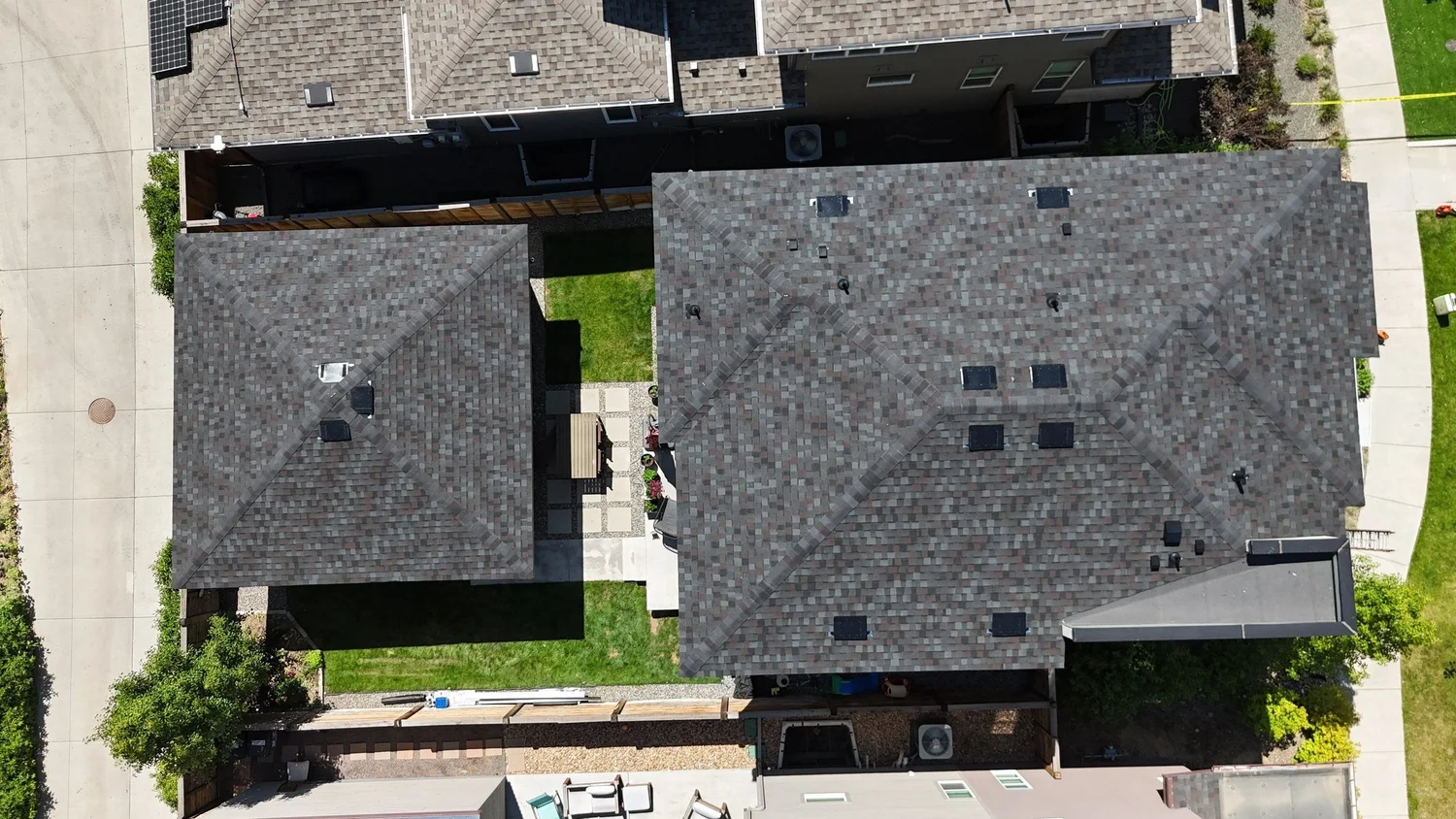
Notice any of these? Book a free inspection and we'll trace the cause, in the attic, not just from the driveway.
Book my free inspectionWe check the roof and go into the attic: existing vents, blocked soffits, insulation, moisture and fan terminations.
We measure attic area, confirm your local code ratio, and work out the NFA you need for intake and exhaust.
We pick one exhaust type, set it at one height, and match intake so the system balances.
Our crew installs Lomanco vents to the manufacturer's instructions, adds baffles where needed, and seals off unused old vents.
We show you what we changed with photos and explain how the new system works.
There isn't a fixed number. It depends on your attic floor area, the ratio your local code requires, and the Net Free Area of the vents used. We calculate total NFA, split it between intake and exhaust, and round up to whole vents.
More isn't better if it breaks the balance. Mixing exhaust types, or adding exhaust without enough intake, can make vents pull air from each other, or even pull conditioned air out of your home, instead of drawing fresh air through the attic.
Yes, arguably more than in summer. Winter ventilation carries away household moisture before it condenses, and it keeps the roof deck cold to help prevent ice dams.
For most shingle roofs with enough ridge length, a continuous ridge vent paired with good soffit intake gives the most even airflow. On hip roofs or short ridges, static louvers like the Lomanco 750 can be the better fit. We decide based on your roof, not a default.
Often, yes. Clearing blocked soffits, adding baffles, adding Deck‑Air intake, or correcting mismatched exhaust can usually be done on an existing roof. If your roof is near the end of its life, we'll tell you whether it makes more sense to fix everything together.
Yes. Shingle manufacturers commonly specify ventilation requirements, and their limited warranties generally exclude damage caused by inadequate ventilation. A new roof over an under‑ventilated attic can leave that damage uncovered, which is one reason we check ventilation before we quote a replacement.
It depends on your policy and local code. When we handle a storm‑damage claim, we document the existing ventilation and what code requires, then walk you and your adjuster through it.
Lomanco has specialized in residential ventilation since 1946 and offers one of the most complete product lines in the industry, with long warranties on its core products. That range lets us build a balanced system for almost any roof with parts designed to work together.
We'll inspect your roof and attic ventilation at no cost and give you straight answers, with no pressure.
Lomanco®, OmniRidge®, OmniRoll®, Deck‑Air® and Whirlybird® are trademarks of Lomanco, Inc. Alta Roofing is an independent contractor. Product specifications are drawn from Lomanco's published materials. Ventilation requirements vary by local building code.