Colorado homeowner policies have changed fast in the last few years. Four roof terms now decide much of what a hail or wind claim pays: cosmetic damage exclusions, roof surfacing payment schedules, actual cash value (ACV) roof endorsements and percentage wind and hail deductibles. This guide explains each one and what to ask your agent. We're a roofing contractor, not a public adjuster, so treat it as a reading guide. Your policy wording and your carrier decide coverage.
Where roof terms hide in your policy
The declarations page is the summary sheet at the front of your policy. It lists your coverage limits, your deductibles and the form numbers of every endorsement attached. An endorsement is an add-on form that changes the base policy, and the declarations page often shows only its number and a short title, something like "Windstorm or Hail Roof Surfacing Payment Schedule."
To read the actual terms, you need the endorsement forms themselves. Ask your agent for the full policy with all endorsements. The Division of Insurance also explains how to request a certified copy of your policy.
The four roof terms that change a claim
Cosmetic damage exclusion
This endorsement refuses payment for hail damage that changes how a roof or metal part looks without affecting how it works, meaning how it keeps water out. Dents in a standing seam panel, dimples in gutters and scuffs on shingles are the usual targets.
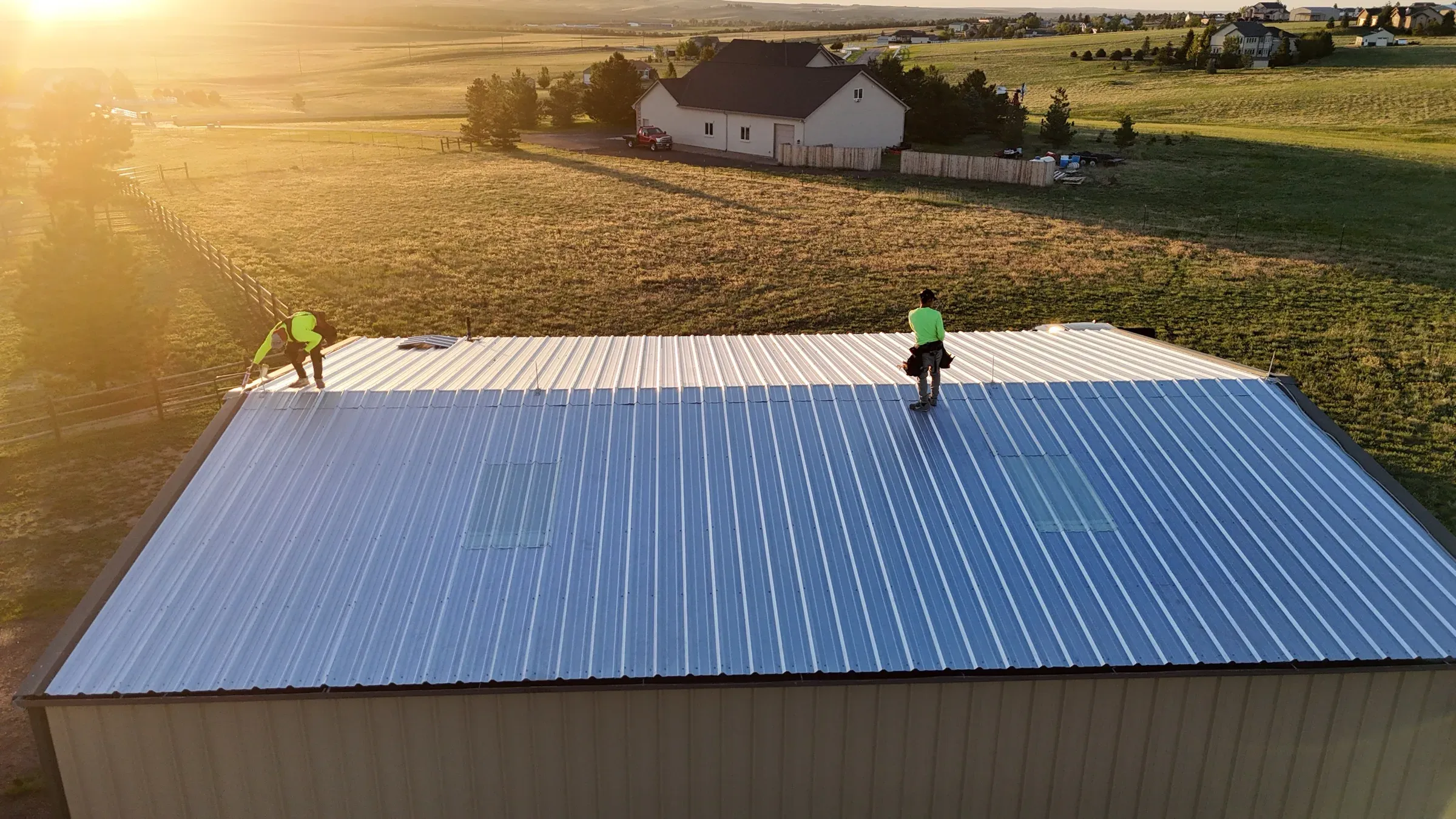
Damage that cracks the shingle mat, punctures a panel or opens a path for water is generally still covered, but the definitions vary by carrier. Metal roofs feel this most, including the metal shops and barns that sit behind so many homes in Pueblo West.
Roof surfacing payment schedule
A schedule pays a set percentage of the roof's replacement cost based on its age and material. A new roof might receive close to full value, while an older one gets a much smaller share. Under a schedule, the difference is never paid back after the roof is finished, unlike recoverable depreciation on a standard replacement cost policy.
ACV roof endorsement
This converts the roof alone to actual cash value: replacement cost minus depreciation. The rest of the house may stay on replacement cost. The held-back depreciation stays with the carrier. Our claim guide's payment tables show how ACV and replacement cost compare on the same roof.
Percentage wind and hail deductible
Many Colorado policies set the wind and hail deductible as a percentage of dwelling coverage. It's figured on the insured value of the house, not on the size of the claim. One percent of $400,000 in dwelling coverage is $4,000. Two percent is $8,000.
| Policy term | What it changes | Where it hurts most | Where to look |
|---|---|---|---|
| Cosmetic damage exclusion | Removes payment for appearance-only hail damage | Metal roofs, gutters, vents, Class 4 shingles that dent without cracking | Endorsement list on the declarations page |
| Roof surfacing payment schedule | Pays a share of replacement cost based on roof age | Roofs past roughly their midlife | Endorsement list, then the schedule table inside the form |
| ACV roof endorsement | Settles the roof at depreciated value | Older roofs, with depreciation never released | Endorsement list and the "loss settlement" wording |
| Percentage wind and hail deductible | Ties your out-of-pocket cost to dwelling coverage | Higher-value homes with modest roof damage | Deductibles section of the declarations page |
How the terms stack: a worked example
The figures below are made up for illustration. Schedules and deductibles vary by carrier and policy.
A house carries $400,000 in dwelling coverage with a 2 percent wind and hail deductible, which comes to $8,000. Hail damages a 15-year-old asphalt roof, and full replacement costs $22,000.
| Policy setup | What the carrier pays | What the homeowner pays |
|---|---|---|
| Standard replacement cost, no roof endorsements | $14,000 (paid in two checks) | $8,000 deductible |
| Roof surfacing schedule paying 40% at 15 years | $8,800 minus $8,000 = $800 | $21,200 |
| Cosmetic exclusion, and the damage is dents only | $0 | Nothing, unless they replace the roof anyway |
The storm and the roof are identical in all three rows. Only the policy changed, which is why we ask for the declarations page before anyone files.
Questions to ask your agent before hail season
- Is my roof settled at replacement cost or actual cash value?
- Does my policy include a roof surfacing payment schedule? If so, what percentage applies to my roof's age and material?
- Is there a cosmetic damage exclusion, and does it apply to the roof, the metal parts or both?
- Is my wind and hail deductible a flat amount or a percentage, and what's the dollar figure?
- Do I carry Ordinance or Law coverage, and what's the limit?
- Would putting on an impact-resistant roof change any of these terms or earn a credit?
What your roofer can and can't do
Alta reads the declarations page with you, inspects the roof, and tells you whether the damage looks bigger than your deductible before you file. We document functional damage the way adjusters assess it, meet the adjuster on the roof and supplement our own scope. That work runs through our insurance claim support and storm and hail restoration teams.
What we don't do is argue coverage for you. If the dispute is about what your policy covers, the next steps are a reinspection, the appraisal clause, a licensed public adjuster or an attorney. You can also file a complaint with the Division of Insurance. Our claim guide lays out those options in order.

Reading your policy before the next storm
Five minutes with your declarations page will tell you more about your next hail claim than the storm will. Find the endorsement list, look up the four roof terms, and call your agent with the six questions above while the sky is clear.
If you'd like a second set of eyes, bring your declarations page to a free inspection. Alta Roofing will look at the roof and the paperwork together and tell you plainly whether a claim makes sense.